

AI Agents Explained Easily: Simple Examples for Beginners
Learn what AI agents are with simple, real-world examples. This beginner-friendly guide explains AI agents, how they work, and why they matter.



AI Agents Explained Easily: Simple Examples for Beginners
Artificial Intelligence (AI) agents are everywhere right now. They answer customer emails, recommend what to buy next, help schedule meetings, and even assist with writing code.
But if we’re being honest, most explanations of AI agents make them sound way more complicated than they need to be.
So let’s slow things down.
In this guide, we’ll explain AI agents in plain English, using simple, real-world examples — no buzzwords, no hype, and no technical overload.
Meta Description
Learn what AI agents are with simple, real-world examples. This beginner-friendly guide explains AI agents, how they work, and why they matter.
What Is an AI Agent? (Simple Explanation)
At the most basic level, an AI agent is a system that can:
Take in information (like a message or request)
Decide what to do with it
Take an action
That’s it.
If that sounds familiar, it’s because humans work the same way.
The difference is that AI agents can do this automatically, instantly, and at scale.
Think of an AI agent as a digital assistant that doesn’t just respond, it understands context and knows what action to take next.
A Simple Real-Life Analogy
Imagine someone working in customer support.
When an email comes in, they:
Read the message
Figure out what the customer wants
Look up the right information
Reply with a helpful answer
Escalate the issue if needed
An AI agent follows the same flow, just without getting tired or overwhelmed.
Easy AI Agent Examples (Real-World Use Cases)
Let’s look at a few practical examples you’ve probably already interacted with.
1. Email Support AI Agent
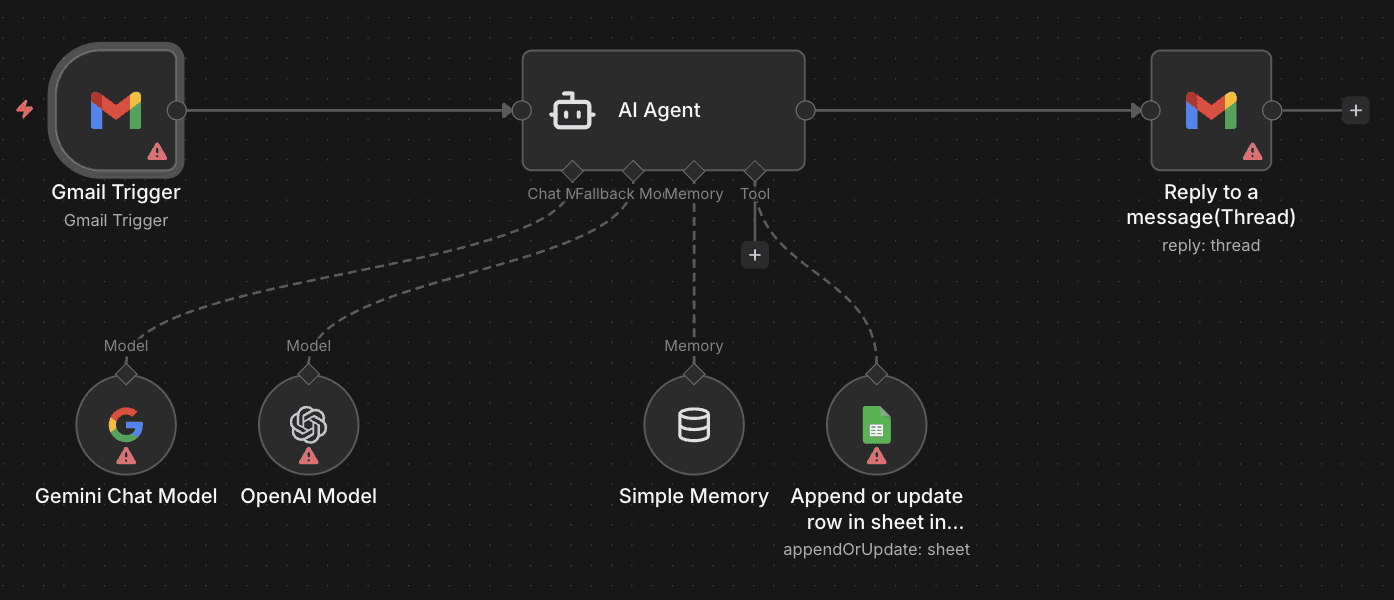
This is one of the most common and useful AI agents today.
What it does:
Reads incoming customer emails
Understands the intent (refund request, bug report, general question)
Pulls the right information from documentation or a database
Drafts or sends a response
Why it matters:
Customers get faster replies
Support teams save hours of repetitive work
Businesses can scale support without hiring endlessly
2. Personal Assistant AI Agent
You’ve probably used one of these already.
Examples:
Scheduling meetings
Sending reminders
Managing tasks
You say something like: “Book a call tomorrow at 3 PM.”
The agent checks your calendar, finds availability, and schedules the meeting — no back-and-forth needed.
3. Sales Lead Qualification Agent
This type of agent lives on websites and chat widgets.
What it does:
Talks to visitors
Asks a few smart questions
Figures out who’s serious and who’s just browsing
Sends qualified leads to the sales team
The result? Sales teams spend time talking to the right people.
4. Coding Notes
What it does:
Helps write code
Explains bugs
Suggests improvements
These agents don’t just autocomplete lines — they understand what you’re trying to build.
How AI Agents Actually Work
Even though AI agents feel smart, their structure is surprisingly straightforward.
Most AI agents include:
Input – emails, chat messages, forms, or API requests
Brain – usually a large language model (LLM)
Memory – databases, documents, or previous conversations
Tools – things like email systems, calendars, CRMs, or APIs
Actions – replies, updates, decisions, or alerts
Good AI agents aren’t about fancy models — they’re about good system design.
What AI Agents Are Not
Let’s clear up a few common misconceptions.
AI agents are:
❌ Not magic
❌ Not human replacements
❌ Not perfect

They still need:
Clear goals
Guardrails
Human oversight
When designed properly, AI agents work best as assistants, not decision-makers.
Why AI Agents Matter Right Now
AI agents are growing fast because they solve real problems:
They reduce repetitive work
They speed up responses
They help small teams do more
They scale better than manual processes
That’s why startups and large companies alike are investing heavily in agent-based systems.
How to Get Started With AI Agents
If you’re new to AI agents, start small.
Pick:
One task
One clear goal
One simple success metric
Good beginner examples include:
Automatically replying to common questions
Categorizing support tickets
Summarizing meetings or emails
You can always add complexity later.
Build AI Agents Faster with IO Projects
At IO Projects, we focus on building and teaching real, production-ready AI agents, not toy demos that fall apart in the real world.
Whether you’re a developer, founder, or team:
Learn how AI agents work in practice
Build systems you can actually deploy
Move from idea to production faster
Final Thoughts on AI Agents
AI agents don’t have to be intimidating.
At their core, they’re just systems that take input, think, and act, much like a human assistant, but faster and more scalable.
Once you understand that, AI agents become far easier to design, build, and use.
If this guide helped, more practical AI breakdowns are coming!